Related Pages
At a glance
- It’s important to understand what we mean by trauma so you can think about whether this information will be helpful or not.
- How do I know if I have experienced trauma?
It’s important to understand what we mean by trauma so you can think about whether this information will be helpful or not.
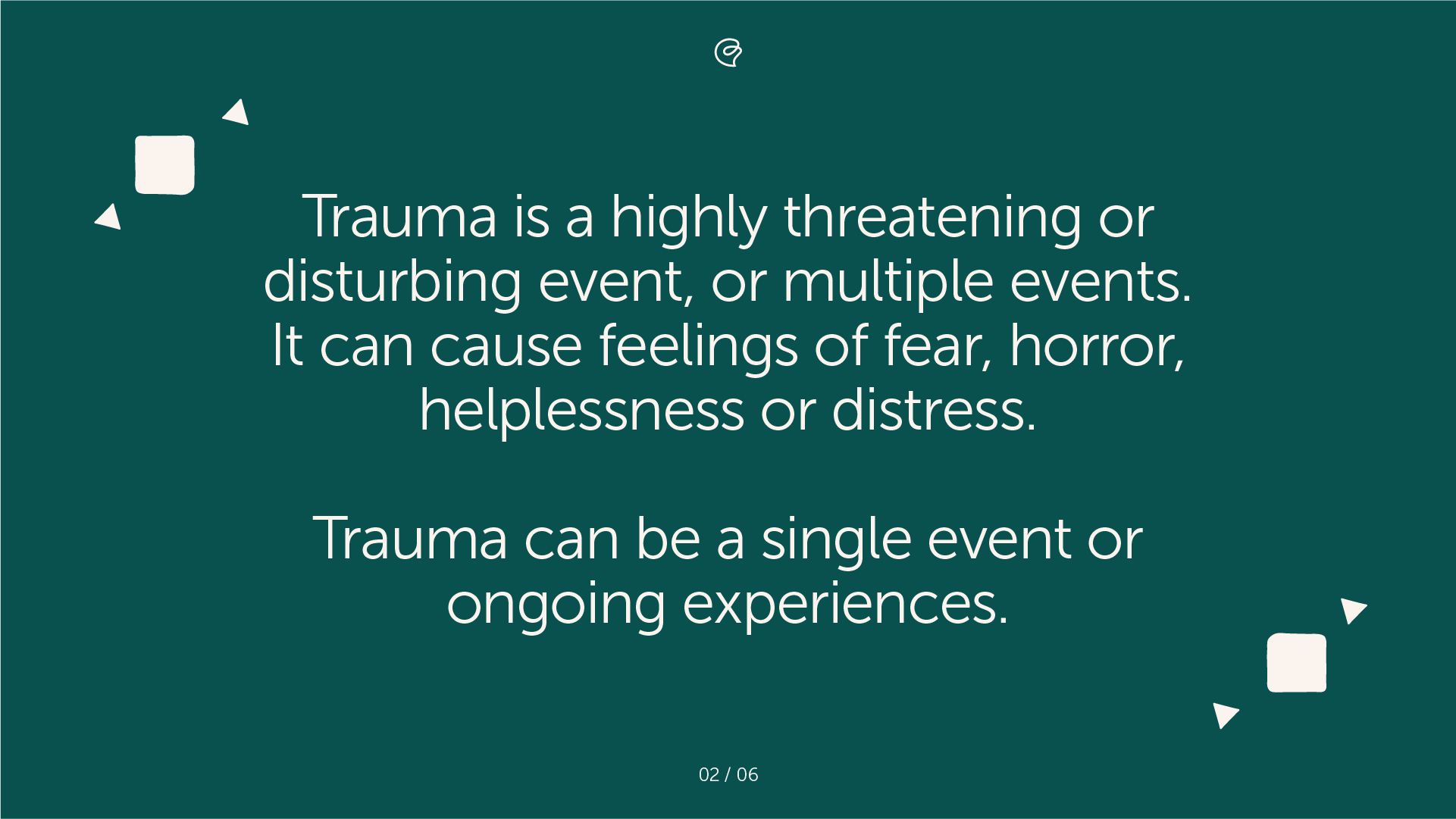
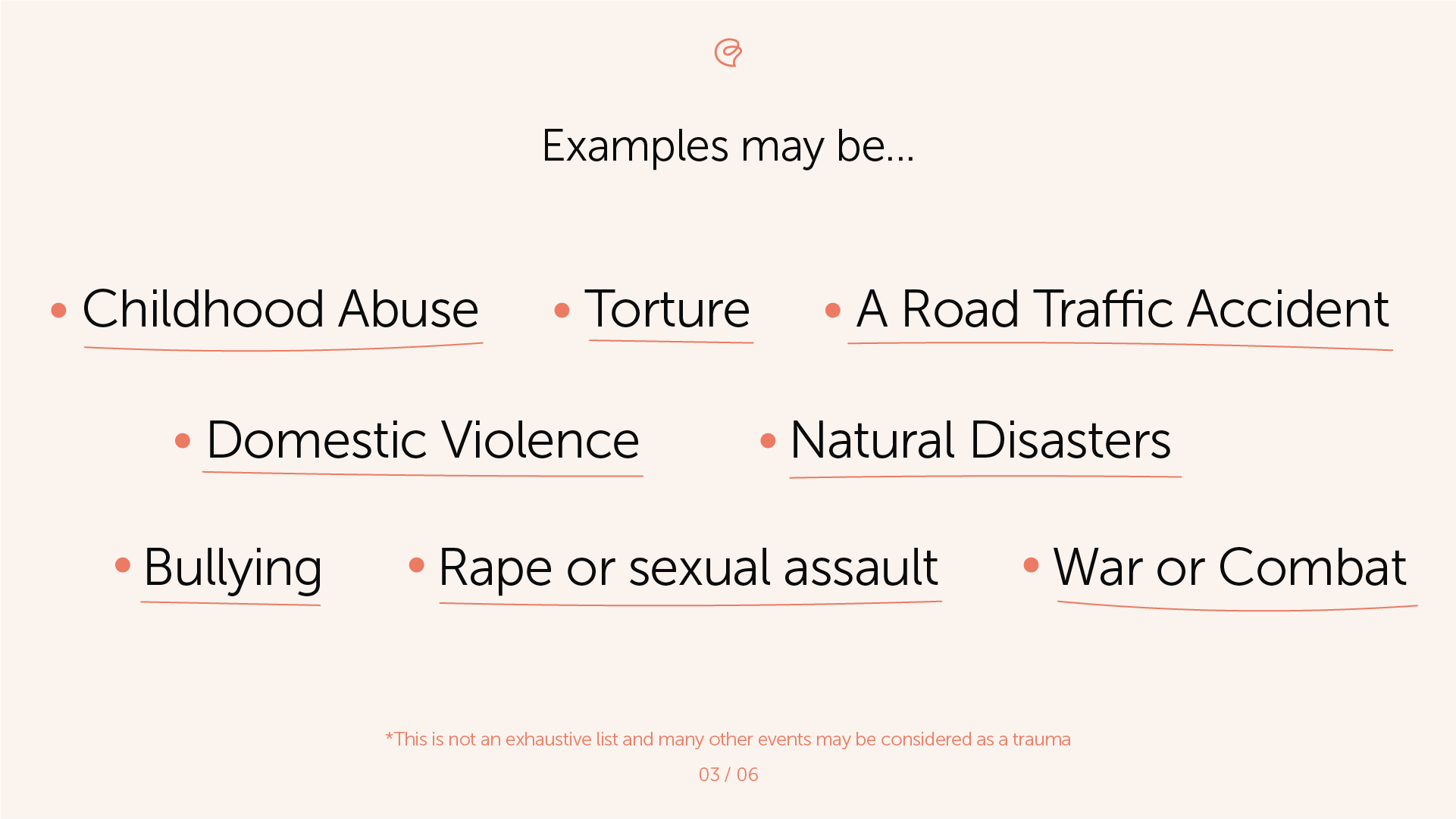
Trauma is a highly threatening event or series of events that is emotionally or physically harmful, and that can lead to feelings of fear, helplessness and horror. Below are some examples of traumatic experiences:
- Childhood abuse (emotional, physical, sexual, or neglect)
- Domestic violence,
- Bullying
- Physical assault
- Rape or sexual assault
- Torture
- Natural disasters like earthquakes
- War and combat as a veteran or civilian,
- A road traffic accident or work accident.
- Gang violence
- Inter-generational trauma
It could be lots of other things too and we hope this list doesn’t exclude anyone, these are just some examples. The most important thing is how the event made you feel at the time. If you experienced intense emotions, such as fear, or high levels of threat, then you are likely to have experienced a traumatic event.
How do I know if I have experienced trauma?
Trauma is a very personal thing and effects people in different ways. any people have never named the difficult experiences they have faced as ‘trauma’ and this may not be the term you prefer to use. However, any experience that leaves you feeling overwhelmed, scared and alone can be traumatic, even if it doesn’t involve physical harm. If your survival, well-being, sense of yourself and of the future were threatened, then you experienced a trauma.
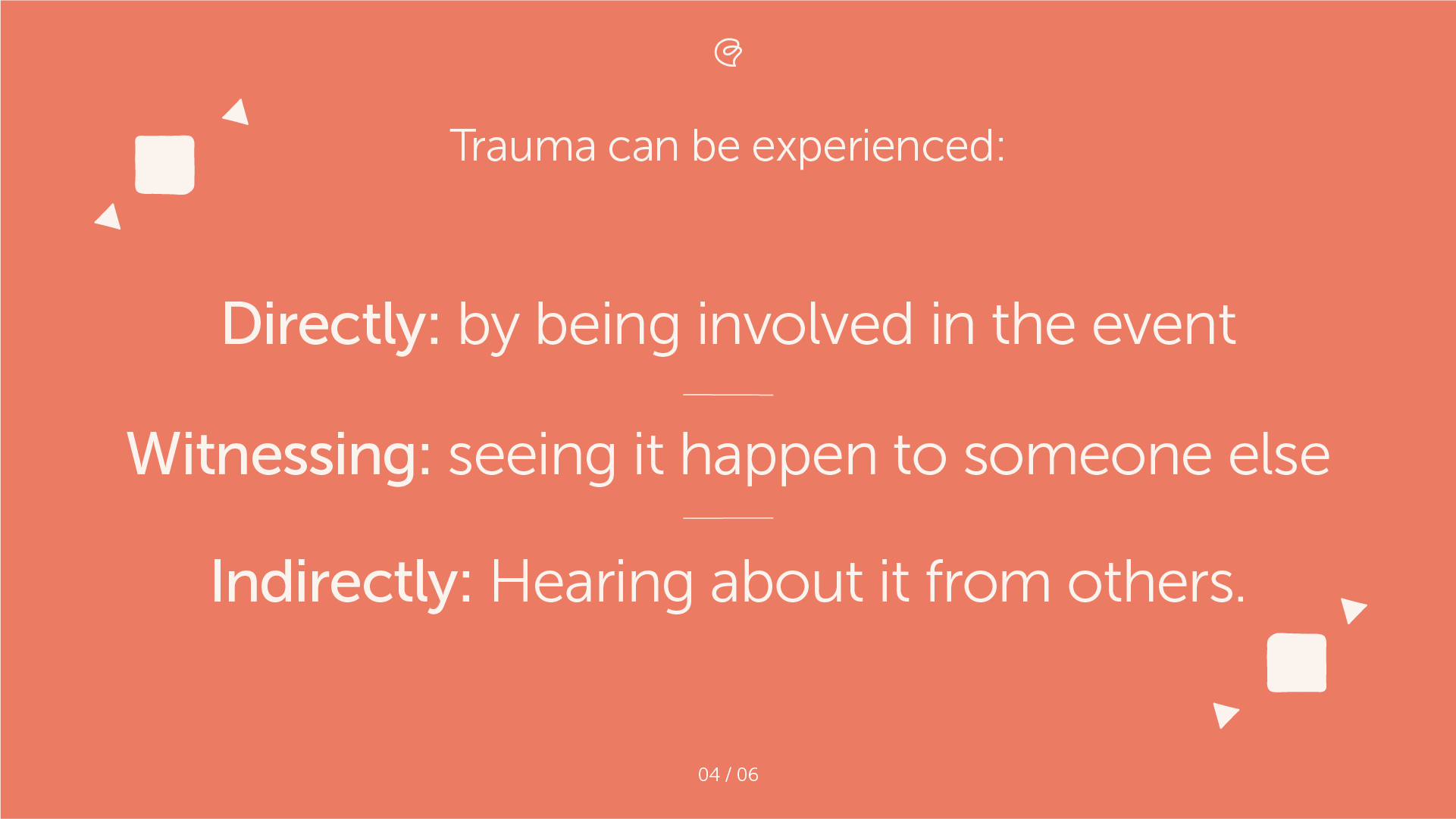
A traumatic event could be experienced by you directly, for example by being involved in the event or watching it happen. It could also be experienced indirectly, for example by hearing about it from others. A trauma can be a one-off event such as an assault or a road traffic accident. It can also involve many events that have occurred over a long period of time. This is often called ‘complex’ or developmental trauma. Not everyone realises the full impact on them at the time, and in fact sometimes people believe these experiences are normal, because they don’t know any different. For example, it is common for children who have been abused to believe this happens to everyone. However, we know that these traumatic events can have very severe consequences.
To learn more about how trauma can affect people, and how to manage difficulties associated with trauma please see the videos and leaflets on this website.