Related Pages
At a glance
What is PTSD and C-PTSD?
This leaflet provides information about Post Traumatic Stress Disorder and Complex-PTSD.
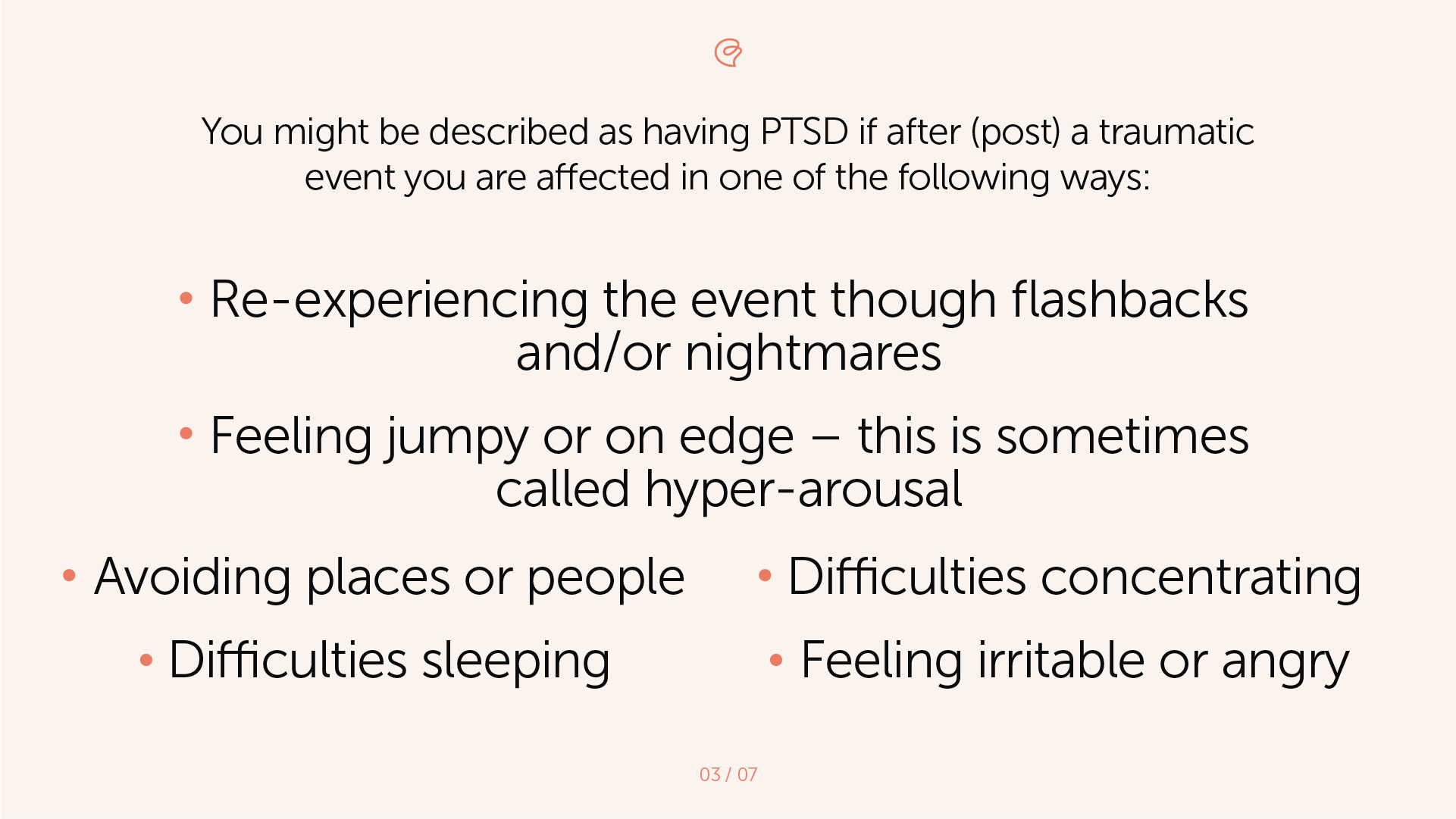
The most important thing to remember is that trauma can affect us all in different ways and just because you have experienced trauma, does not mean you will have PTSD or C-PTSD. What is most important to understand is how your experiences have affected you and what support you might need. If your reaction to trauma is particularly severe or long lasting you might be given a diagnosis of PTSD or Complex PTSD. Essentially, this is a shorthand way of describing that you have experienced trauma and are still affected in one or more of these ways:
- Re-experiencing symptoms – nightmares/flashback
- Avoidance and emotional numbing
- Hyper arousal/hyper alert – feeling jumpy.
We’ll go into each of these in a bit more detail to help explain…..
Re-experiencing symptoms
This means re-experiencing parts of the traumatic event as if they are happening again in the here and now. For example; you might experience vivid upsetting thoughts, images that come back into your mind even though you might be trying hard not to think about it. Having vivid unwanted memories of the trauma in your mind, is often called a flashback. Flashbacks can feel like the trauma is happening all over again and they might feel different to ‘normal memories’. You might be able to hear specific sounds, smell certain things or experience sensations. Re-experiencing memories might also be in the form of distressing nightmares about the event or similar events. As a result of these nightmares you might wake up very distressed with your heart racing or sweating, and you may have difficulty getting back off to sleep.
Avoidance and emotional numbing
If these upsetting and intrusive memories keep coming into your mind it is understandable that you would try and push them away and avoid them. It makes sense then that you might try to avoid talking about what happened or indeed avoid anything that reminds you about the trauma such as people, places, smells that may be associated with what happened. If these thoughts or memories do come into your mind you’re going to try quite hard to push them away perhaps by distracting yourself, maybe by engaging in an activity or sport, going out for a walk, or staying home. Some people also try to block things out by using alcohol or substances. For some people the avoidance extends to feeling completely numb which could be accompanied by a loss of interest in everyday life and very low mood. Avoidance of the memory also stops the brain from working through what happened, known as ‘processing’ and leaves things unresolved and continues to be triggered by reminders keeping the mind and body in a state of threat.
Hyper-arousal
The other area of difficulty for people with PTSD experience is hyper-arousal. This is where people describe feeling ‘on edge’ or ‘hyper-alert’, always looking for threats. You might struggle to relax or switch off, feel jumpy and unsafe. You might struggle to sleep, have difficulties concentrating and feel irritable and perhaps lose your temper more than you normally would. These experiences are understandable as you scan the environment and are always on the look out for threats in an attempt to prevent or respond to any further traumatic events occurring.
Complex PTSD (C-PTSD)
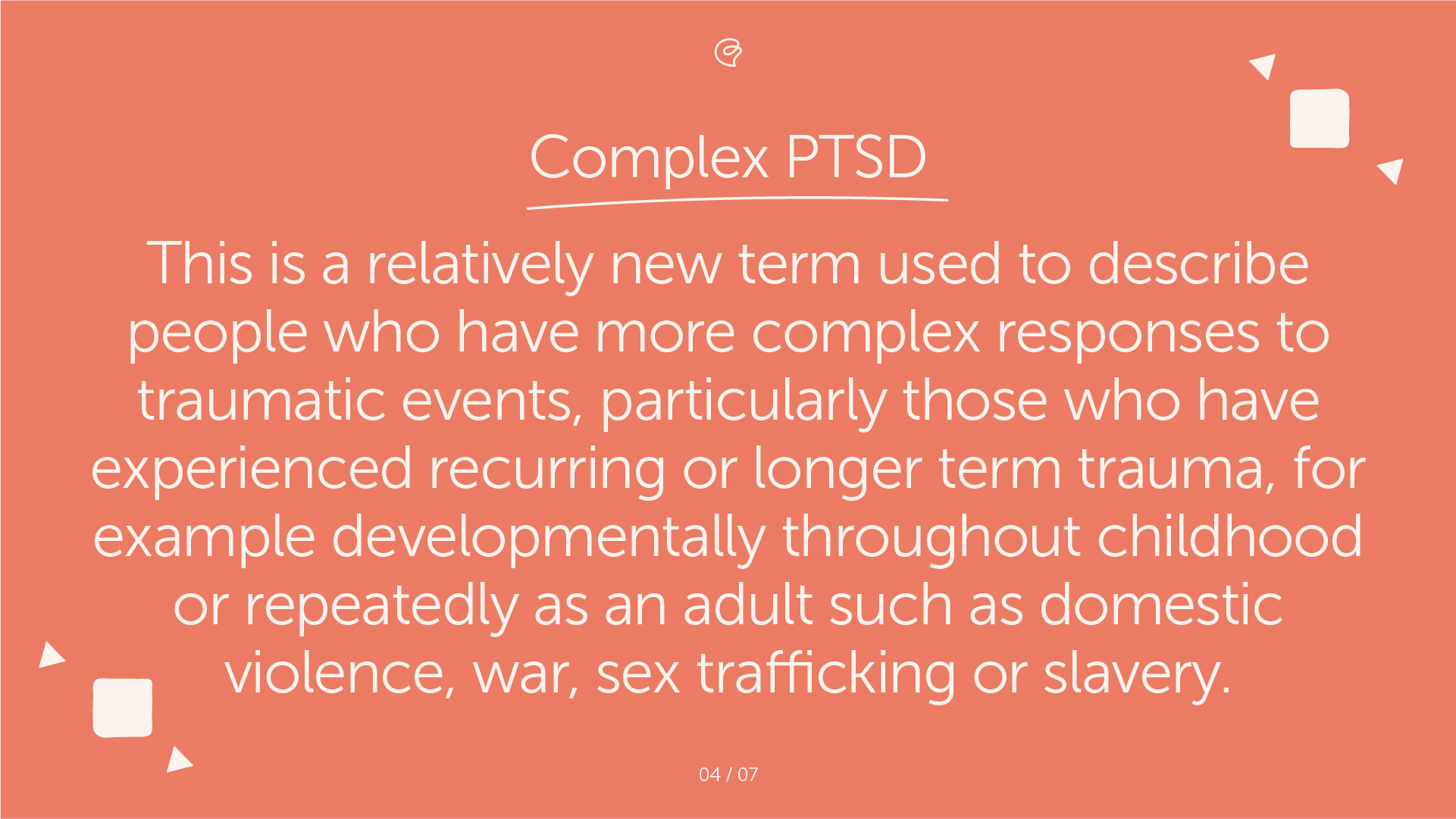
Complex PTSD is a relatively new term used to describe people who have a more complex response to traumatic events, particularly those people who have experienced recurring or longer-term traumatic events. For example following childhood abuse, domestic violence, sexual abuse, war, torture, sex trafficking or slavery.
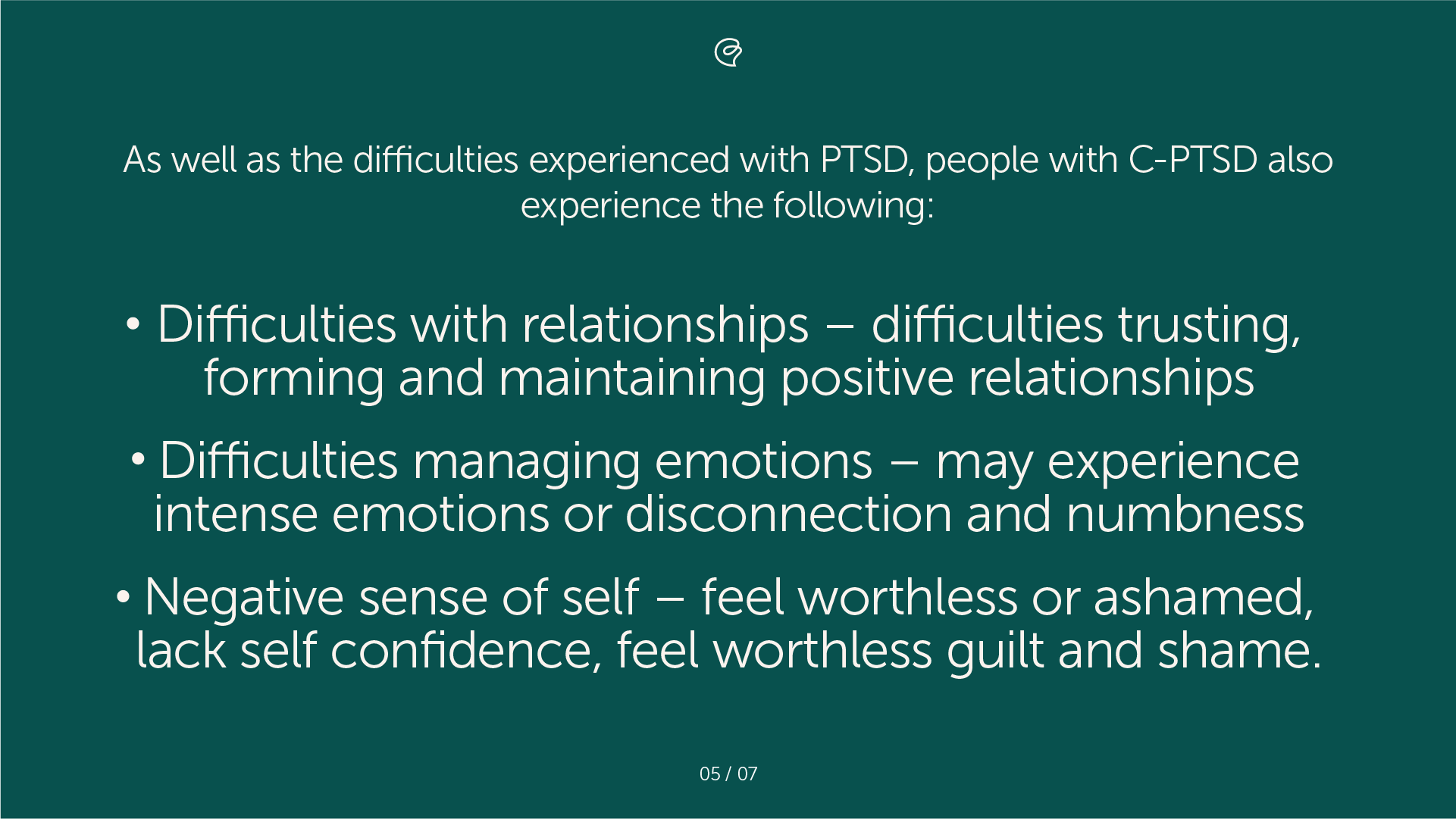
As well as the difficulties experienced within PTSD, people with Complex PTSD also experience:
- Difficulties within relationships, for example difficulties trusting others, making and maintaining relationships.
- Difficulties managing emotions
- Negative sense of self for example, having a lack self-confidence, feeling worthless and experiencing high levels of shame, and guilt
If we think about these difficulties a bit more it is unsurprising that as a result of the harm people have experienced at the hands of others they have difficulties with trusting people and maintaining relationships. In the long term difficulties forming and maintaining relationships can also be a blocker to recovery as we know that having supportive relationships are so important when recovering from a traumatic event.
People with complex PTSD also experience difficulties regulating their emotions. Certain emotions often those linked to how you felt at the time of the abuse such as fear, shame and guilt are easily triggered and can feel difficult to control. People might experience intense and rapid mood changes, feel easily overwhelmed by their emotions and find it difficult to self soothe or calm down. As well as feeling intense emotions, they might also experience emotional numbness feeling ‘cut off’ and detached. Often this develops as a way of protecting ourselves from strong negative/uncomfortable emotions.
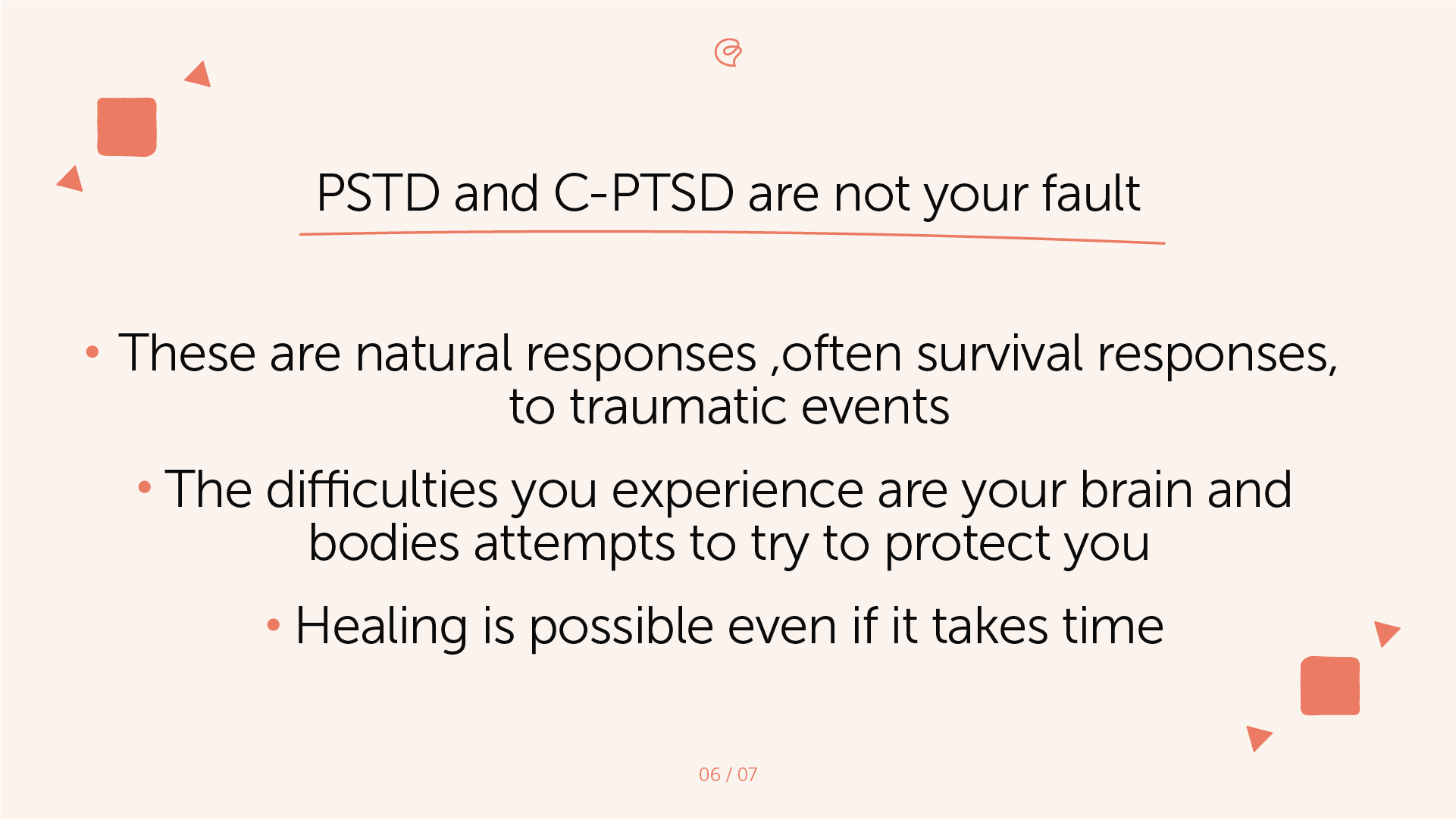
Some people also experience dissociation. This is when a person feels distant from the here and now. This could range from daydreaming to watching yourself do things, almost like an out of body experience. It might also feel like ‘blanking out’ or switching off’ in response to reminders of the trauma. This is the brains response to stress and protects us from getting overwhelmed. It’s important to know that you’re not going mad if you experience this. Even people who have not experienced a trauma dissociate from time to time for example during periods of stress, tiredness or even boredom.
Finally, traumatic events, particularly those associated with harm from others can have a big impact on a person’s self-worth and self-confidence, and as a result people often feel high levels of shame, worthlessness and guilt.
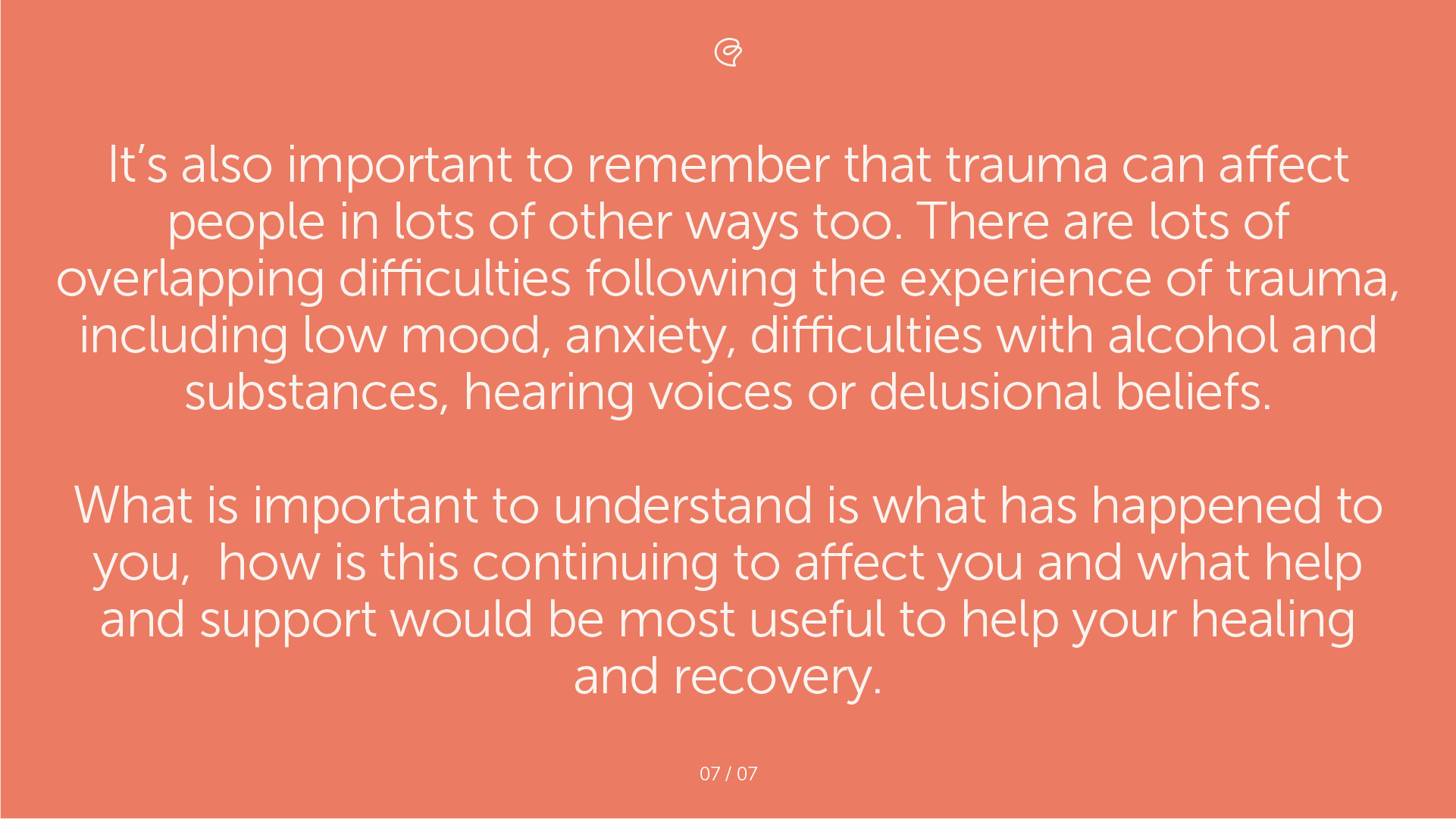
Here we have described difficulties consistent with PTSD and C-PTSD however it’s important to recognise that these are not the only ways that people are psychologically affected by trauma events. There are lots of ways in which trauma can affect people and indeed there are often lots of overlapping difficulties following the experience of trauma for example depression/low mood, anxiety and difficulties with alcohol or substance misuse, hearing voices or having delusional beliefs. What is important is that you consider what makes most sense to you.