What is Trauma?
Understanding how trauma can affect us.
At a glance
- Understanding how trauma can affect us.
- Difficulties trusting others
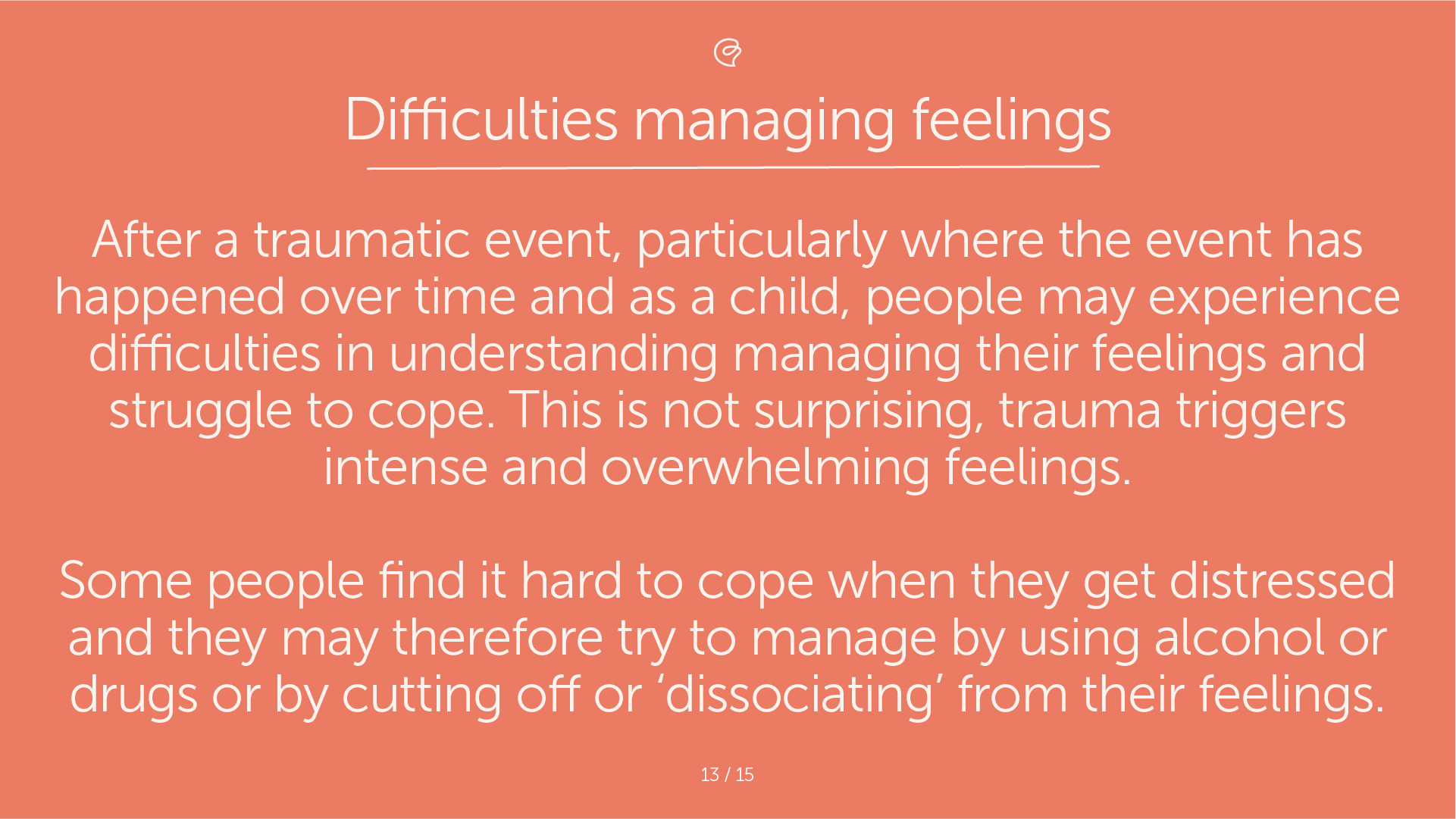
- Difficulties managing feelings
- Low self-esteem/negative sense of self.
- Voices and/or visions
Understanding how trauma can affect us.
People who experience trauma are often resilient and find various ways to cope and live a full life. However, trauma can have a significant impact people on people’s wellbeing in a variety of ways.
Trauma is a very personal thing. What can be traumatic for one person can be of less significance to others. Sometimes people may think ‘why have I been affected so badly by this and others haven’t?
Lots of things can contribute to how you respond and experience a traumatic event. This includes:
- an individual’s personality, beliefs and values
- how old you are at the time of the event,
- how supported you were or felt at the time. For example, did you feel to blame, could you talk about how you were feeling to others, did you get reassurance/safety from others?
Trauma doesn’t have to have lasting effects. Any traumatic event is bound to be upsetting when it actually happens. For example, it is normal to be shaky, tearful and frightened for days or weeks after an assault or a car crash, but if you can talk to friends and family and are believed and supported, you are much more likely to be able to put the event behind you and get on with your life.
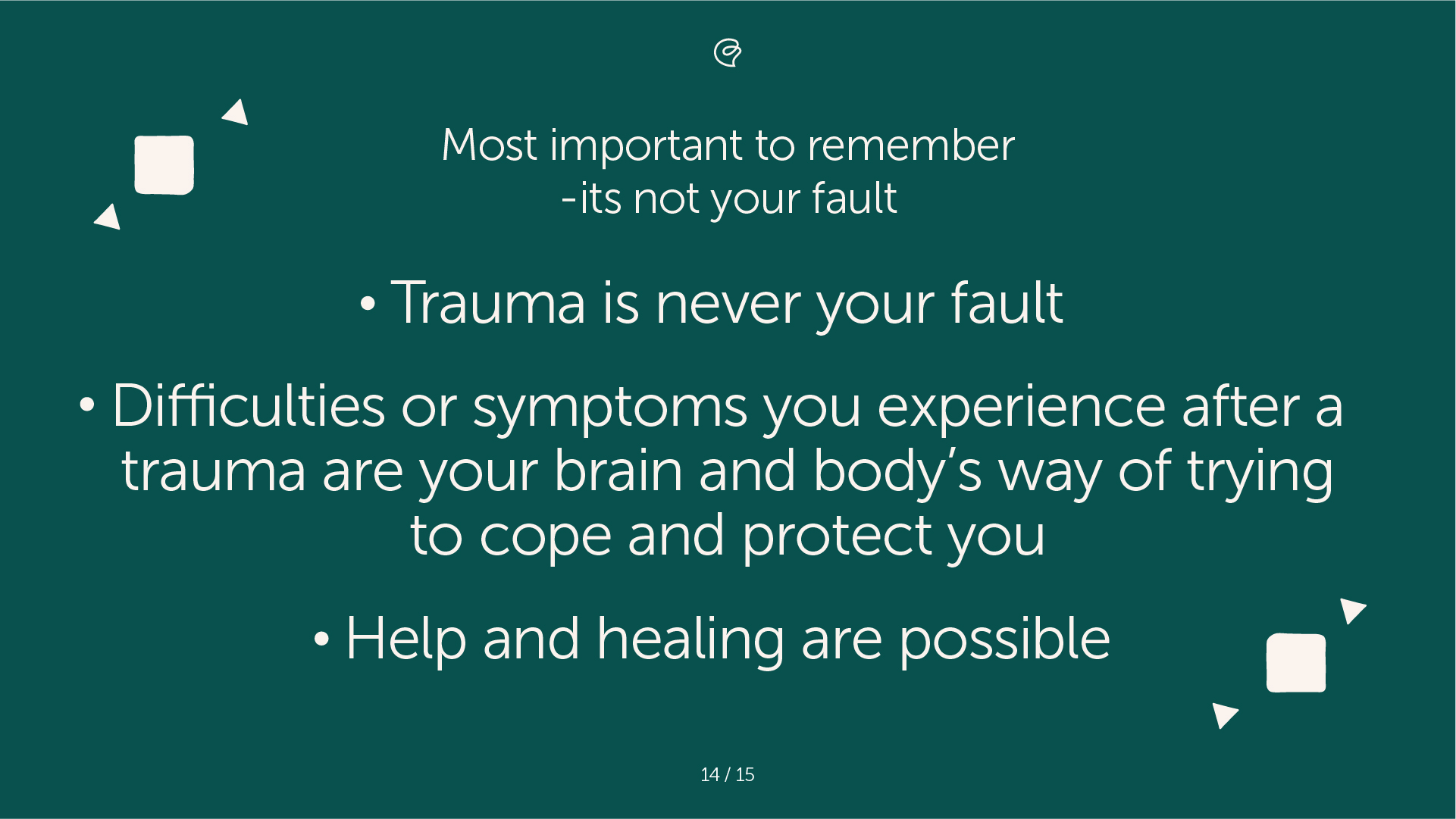
However, recent research has shown that trauma can often have serious and lasting effects on people’s mental health. Trauma is more likely to affect us when it is long term and complex, and when we had no one to believe, protect and support us. If you felt that the trauma was a shameful secret, or an abuser told you not to tell anyone, or you believed that the trauma was your fault, or you were trapped for years in an abusive relationship, you are much more likely to suffer mental health problems.
It is very common for people who access mental health services to have experienced trauma and adversity at some point in their lives. Therefore, when we are trying to understand the reasons for mental health difficulties it makes much more sense to think about ‘what has happened to you’ and ‘what do you need’ rather than ‘what is wrong with you’.
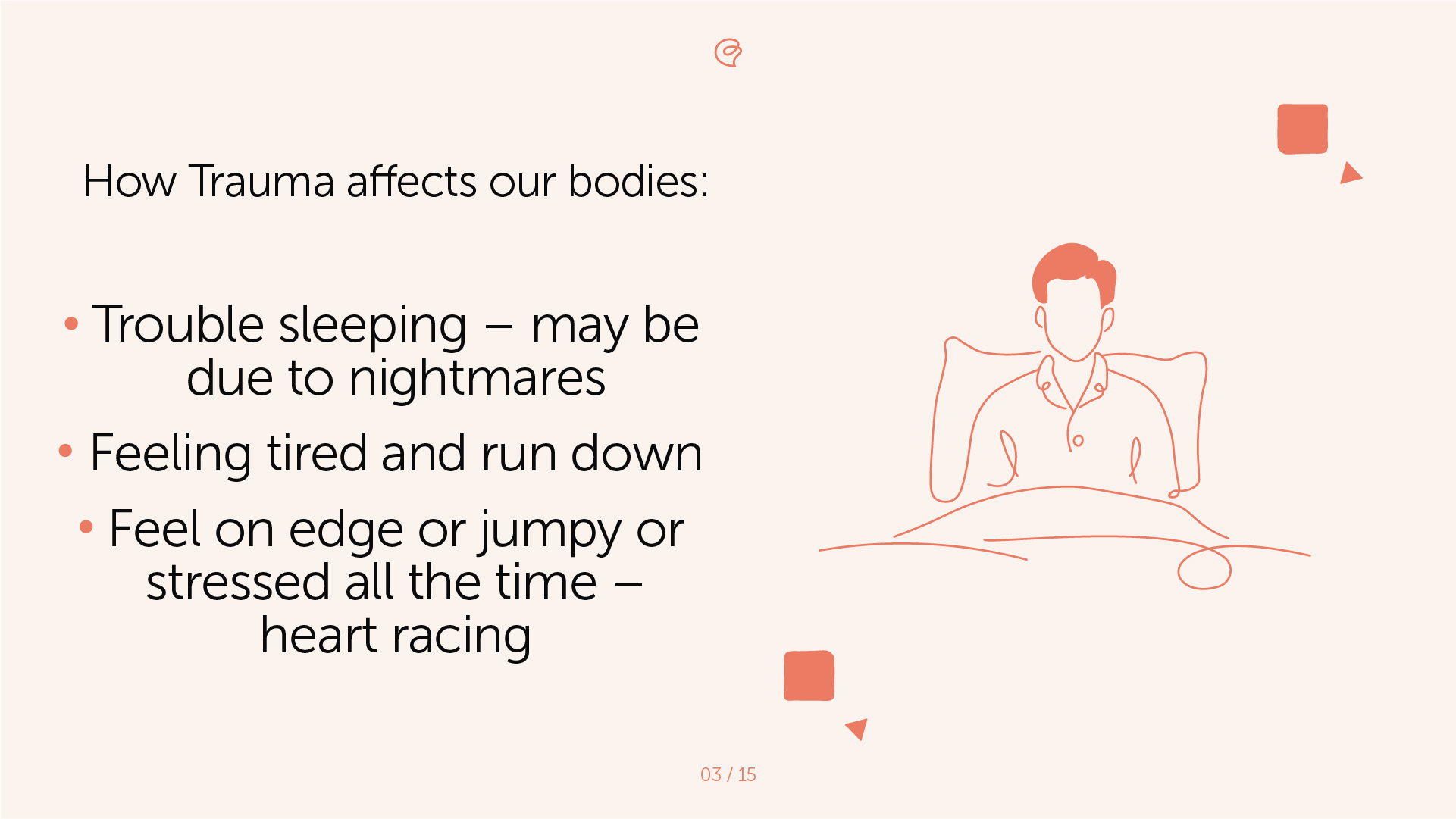
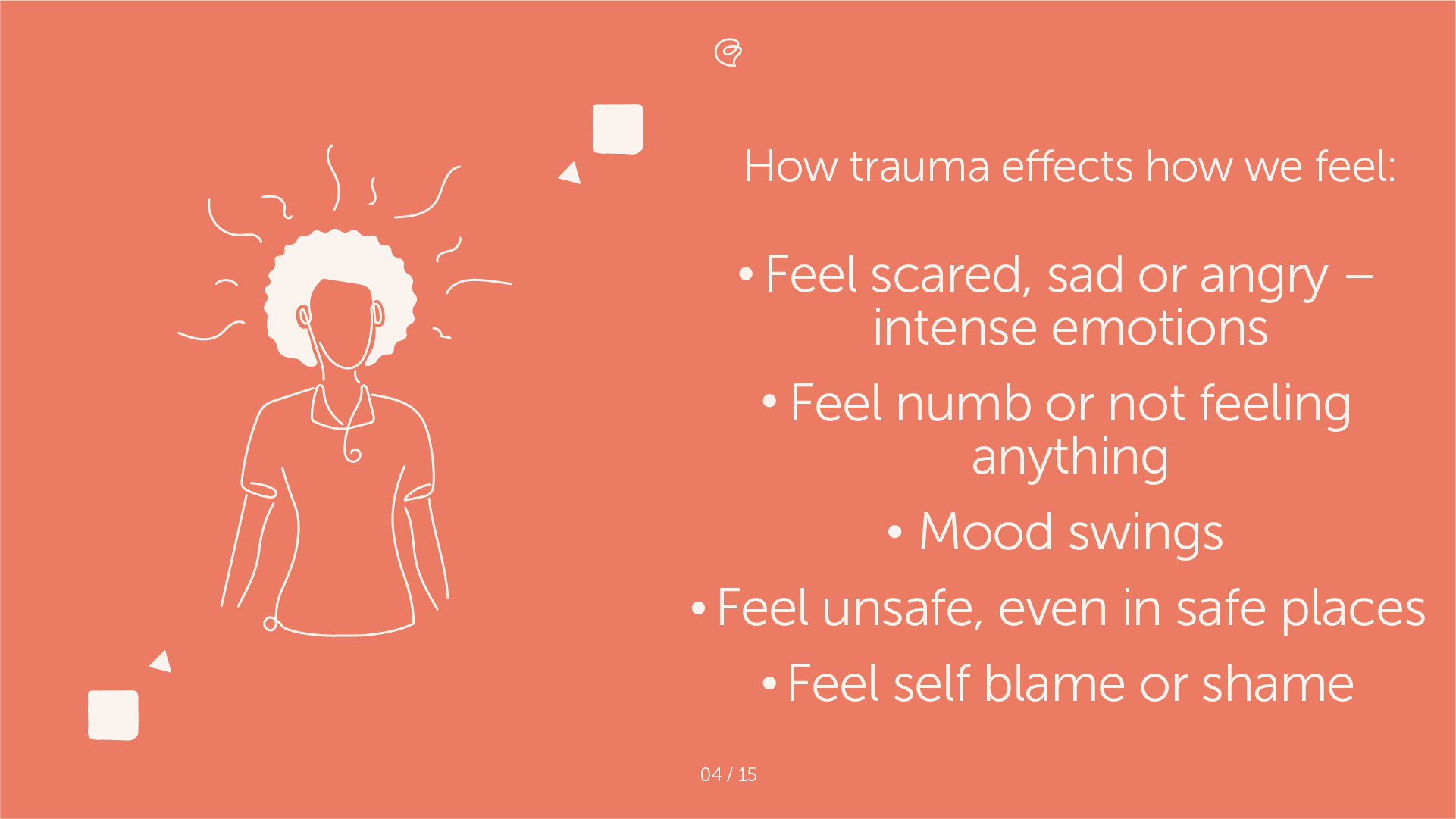
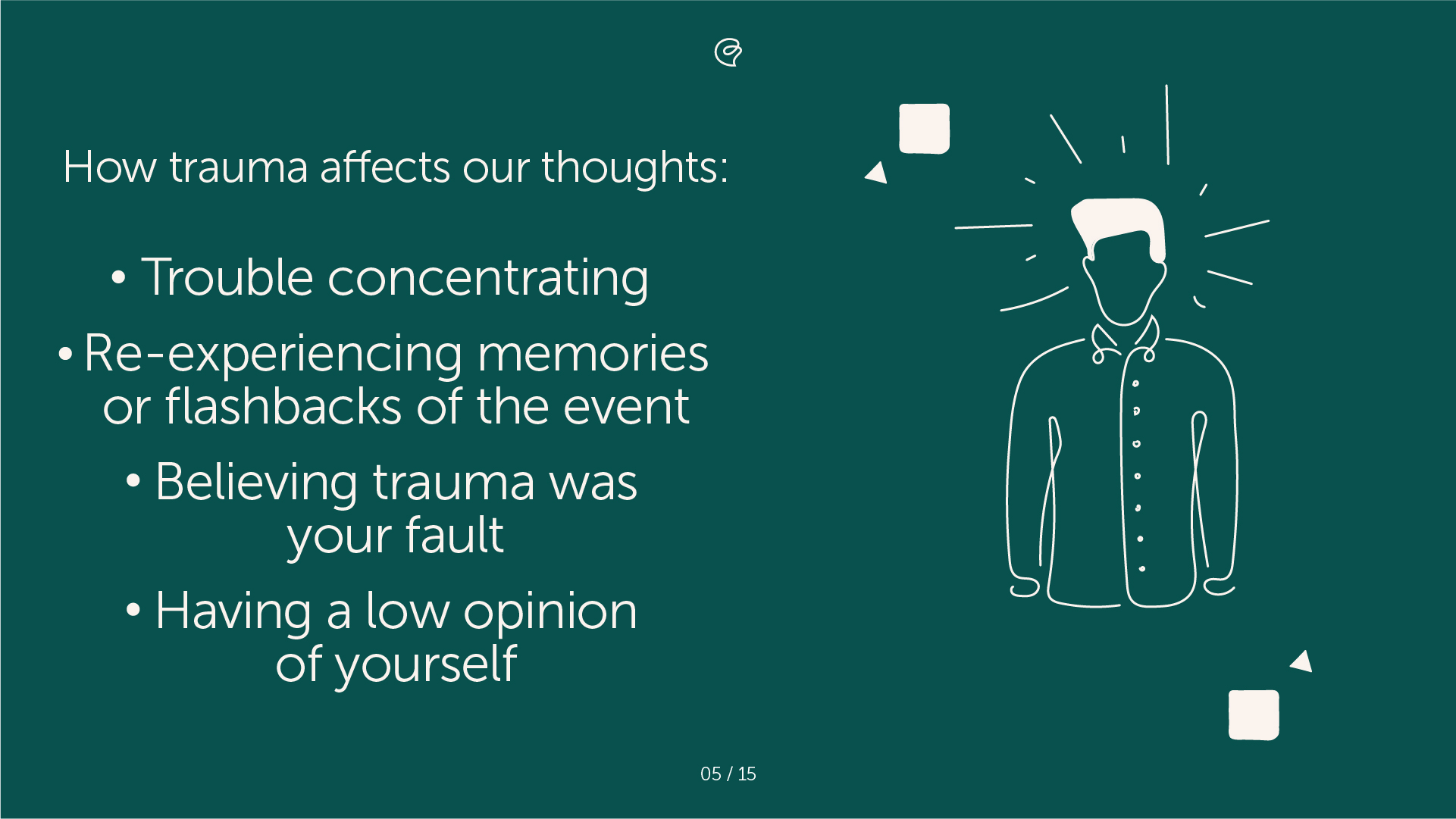
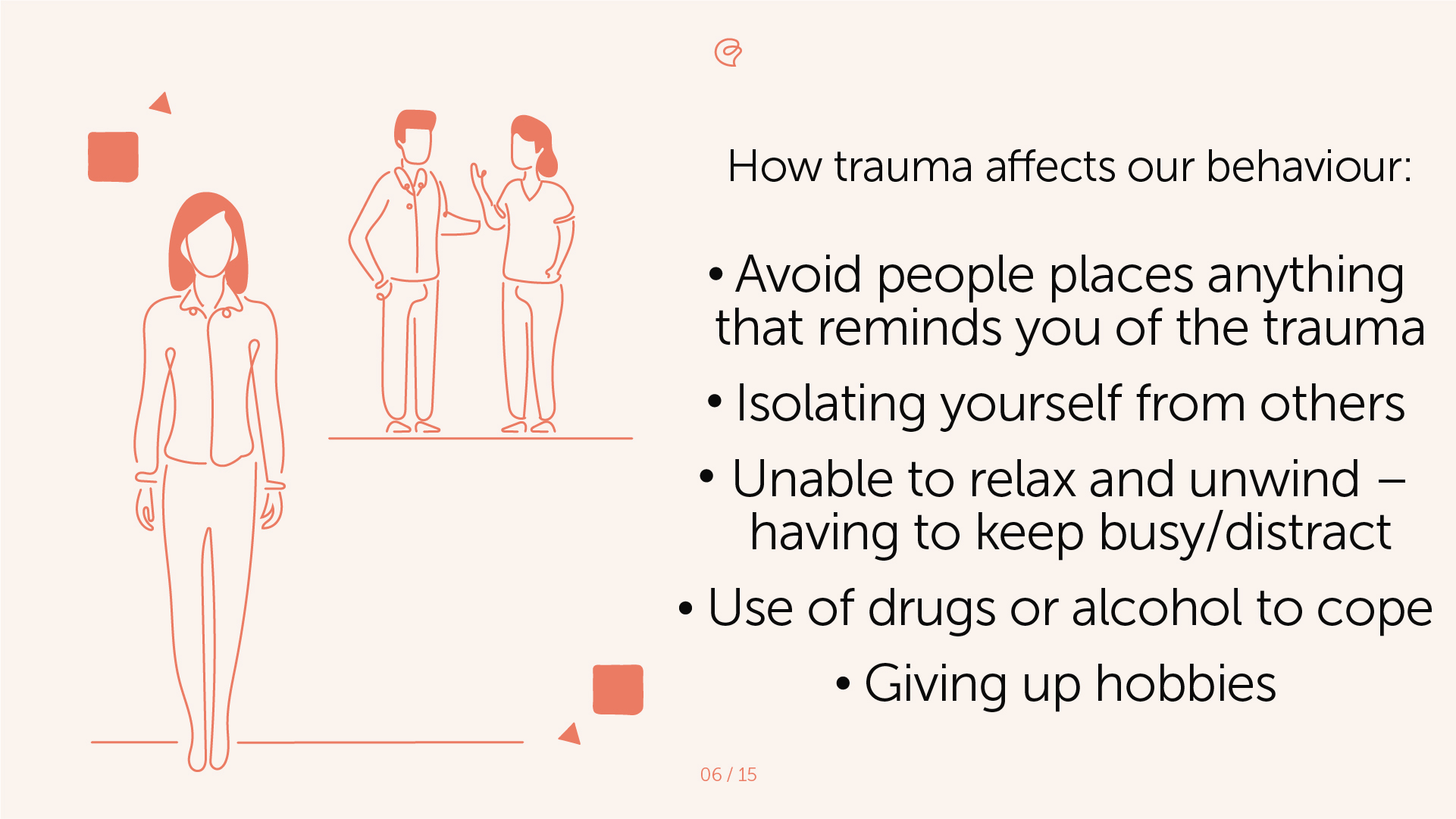
Trauma can affect how we feel, think, and relate to others in various ways. The table below gives some examples of how trauma can impact on how we think, feel, behave and the impact on the body.
Difficulties trusting others
It is not surprising that people who have been hurt by others, sometimes by the people who were supposed to look after them, have difficulties with trust. People describe swinging between hope (thinking that at last someone understands them and can help them) and distrust (suddenly becoming terrified that they are going to be betrayed again). It may feel safer to cut yourself off from other people and not to confide in anyone.
Difficulties managing feelings
People who have experienced multiple, complex traumas may find it difficult to cope with their feelings. They may find their emotions overwhelming, difficult to label or know what they are feeling. It is understanding then that these intense and overwhelming feelings are difficult to control. For example someone may feel full of anger, guilt, shame and fear. Some people describe finding it very hard to calm themselves when they are upset, and may turn to drink, drugs or self-harm to relieve their feelings.
Sometimes the only way to cope is to cut off or ‘dissociate’ from these feelings. This is a very common experience. It can happen without trying, as it is our brain’s way of keeping us safe and happens automatically. As a result, memories may be fragmented, and people may feel out of contact with their feelings and their bodies. This is explored in more detail in the section on ‘Dissociation.’ You might also find it helpful to watch the ‘window of tolerance’ video.
Low self-esteem/negative sense of self.
Many people, especially those who have experienced trauma as a child or for prolonged periods of time, over years in long term relationships, develop a very low self-worth leading to high levels of shame, guilt and unworthiness or feeling unlovable. They may develop very negative or harsh ‘inner critics’ – a harsh self-critical inner voice which may echo/repeat past abusers or trauma experience. Having a low self-esteem can lead to difficulties within relationships. For example feel unworthy can make it difficult to set firm and safe boundaries and can lead to people pleasing, difficulties getting your own needs met and at times staying in toxic situations or relationships and suffering further abuse or trauma.
Voices and/or visions
Some people have voices and visions, which simply means that they are hearing, seeing or sensing something that others around them are not. This can occur in all five senses, hearing, sight, smell, taste and touch, sometimes in combination.Research suggests that people who hear voices that others do not hear are very much more likely to have experienced traumas of various kinds. It is now thought that hearing voices, especially if they are critical and hostile, can be understood as a kind of memory of the abuse. This makes sense given that voices often sound like the abuser, or say the things the abuser said, or express the same feelings of shame and guilt that the person has about themselves as a result of the abuse. This is discussed in more detail in the section on ‘Hearing voices.’
If you have very strong beliefs about people pursuing you or spying on you or being out to get you, or plotting against you, this may also be a reaction to trauma. It is not surprising that the world may seem a very dangerous place after what you have been through. Sometimes these realistic fears seem to get exaggerated, and it is hard to work out what is true and what is not. This is discussed in the section on ‘Unusual beliefs.’